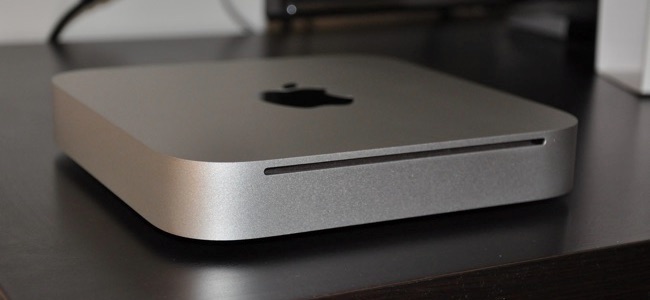
Apple Server Diagnostics For Mac
четверг 06 февраля
Apple Server Diagnostics For Mac 6,1/10 2074 votes
Apple System Diagnostics (ASD): The Mac daddy of Apple’s test suites, this will test your Mac in every way Apple can. Unfortunately, this test will require you to leave your Mac at the Apple Store, so they can run the test overnight as it can take anywhere from 1 to 4 hours to complete. System Information is a software utility derived from field service diagnostics produced by Apple's Service Diagnostic Engineering team, at that time located in.
- Mac computer with macOS Mojave.
- 2GB of memory.
- 10GB of available disk space; some features require additional disk space.
- Some features require iOS 11 or later or macOS Mojave.
- Some features require an Apple ID; terms apply.
- Some features require compatible Internet service provider; fees may apply.
- Some features require program enrollment.
- Some features are not available in all countries or regions.
Languages
MainStage features ReWire and MIDI-out support. That means everything you use to perform is right on your Mac, giving you total control. Each Patch works as a self-contained audio mixer and router, so you can completely change direction mid-performance. One minute you can be playing some heavily distorted guitar with a full backing band. MainStage 3 lets you take your Mac to the stage with a full-screen interface optimized for live performance, flexible hardware control, and a massive collection of plug-ins and sounds that are fully compatible with Logic Pro X. The Ultimate Live Rig. MainStage 3 is an app designed and developed for OS X and macOS systems that helps to create music and sounds for your live show. With an array of plugins and sounds that are compatible with Logic Pro X, MainStage 3 provides users with the ultimate live rig for digital production and effects that are second to none. Maintidget for mac. Running a regular maintenance schedule is an important part of keeping your Mac functioning healthily. Maintidget makes life easier by allowing you to do so directly from your dashboard. Maintidget has two main functions. The first is simply to display the last time the daily, weekly, and monthly OS X Maintenance Scripts were last run.
- English
- Japanese
- French
- German
- Simplified Chinese
- Dutch
- Italian
- Korean
- Spanish
- Traditional Chinese
Applications
- Server app
Product Overview
Service and Support
When your operation hinges on network availability, you can’t afford server downtime. To ensure rapid issue resolution for your server deployments, Apple offers a comprehensive range of technical support plans and products to keep your organization running and up to date.
Consulting
Get help from qualified professionals with experience deploying, developing, and customizing Apple and third-party solutions to fit your needs.
If you've followed the steps to connect your Mac to a Wi-Fi network, but the connection to your network or the Internet isn't reliable, the steps in this article might help.
Check for Wi-Fi recommendations
When your Mac tries to connect to a Wi-Fi network, it checks for issues that affect its ability to create a fast, stable, and secure connection. If an issue is detected, the Wi-Fi status menu in the menu bar shows a new item: Wi-Fi Recommendations. Choose it to see recommended solutions.
Wi-Fi recommendations are available in macOS Sierra or later.
The lack of right-to-left support is only one of a number of features not available on the Mac Version of Office.)Now the good news: the newest version of Office for Mac (2011) has demonstrated limited success with using Eastern scripts (including Arabic, Hebrew, and Syriac), despite the fact that they are not fully supported. First the bad news: Microsoft Office for Mac does not fully support right-to-left typing or connecting scripts. (Note: this has nothing to do with Mac OS; Microsoft just does not make the Mac version of Office do everything that the Windows version can do. Syriac dictionary. Specifically, this means that although you cannot create a setting to make the Eastern scripts work correctly, you can migrate the correct setting from another word document that contains Syraic text.
Analyze your wireless environment
Your Mac can use Wireless Diagnostics to perform additional analysis.
- Quit any apps that are open, and connect to your Wi-Fi network, if possible.
- Press and hold Option (Alt) ⌥ key, then choose Open Wireless Diagnostics from the Wi-Fi status menu .
- Enter your administrator name and password when prompted.
Wireless Diagnostics begins analyzing your wireless environment:
If the issue is intermittent, you can choose to monitor your Wi-Fi connection:
When you're ready to see recommendations, continue to the summary. Wireless Diagnostics asks for optional information about your base station or other router, so that it can include that in the report it saves to your Mac.
Click the info button next to each item in the summary to see details about that item. Wi-Fi best practices are tips that apply to most Wi-Fi networks.
Back up or make note of your network or router settings before changing them based on these recommendations—in case you need to use those settings again.
Monitor your Wi-Fi connection
Your Mac can monitor your Wi-Fi connection for intermittent issues, such as dropped connections. Follow the steps to analyze your wireless environment, but choose ”Monitor my Wi-Fi connection” when prompted.
During monitoring, a window shows that monitoring is in progress. Monitoring continues as long as this window is open and you're on the same Wi-Fi network, even when your Mac is asleep.
If Wireless Diagnostics finds an issue, it stops monitoring and shows a brief description of the issue. You can then resume monitoring or continue to the summary for details and recommendations.

Create a diagnostics report
Wireless Diagnostics automatically saves a diagnostics report before it displays its summary. You can create the same report at any time: press and hold the Option key, then choose Create Diagnostics Report from the Wi-Fi status menu . It can take your Mac several minutes to create the report.
- macOS Sierra and later saves the report to the /var/tmp folder of your startup drive, then opens that folder for you.
To open the folder manually, choose Go > Go to Folder from the Finder menu bar, then enter /var/tmp. - OS X El Capitan or earlier saves the report to your desktop.
The report is a compressed file with a name that begins “WirelessDiagnostics.” It contains many files that describe your wireless environment in detail. A network specialist can examine them for further analysis.
Use other diagnostics utilities
Wireless Diagnostics includes additional utilities for network specialists. Open them from the Window menu in the Wireless Diagnostics menu bar:
- Info gathers key details about your current network connections.
- Logs enables background logging for Wi-Fi and other system components. The result is saved to a .log file in the diagnostics report location on your Mac. Logging continues even when you quit the app or restart your Mac, so remember to disable logging when you're done.
- Scan finds Wi-Fi routers in your environment and gathers key details about them.
- Performance uses live graphs to show the performance of your Wi-Fi connection:
- Rate shows the transmit rate over time in megabits per second.
- Quality shows the signal-to-noise ratio over time. When the quality is too low, your device disconnects from the Wi-Fi router. Factors that affect quality include the distance between your device and the router, and objects such as walls that impede the signal from your router. Learn more.
- Signal shows both signal (RSSI) and noise measurements over time. You want RSSI to be high and noise to be low, so the bigger the gap between RSSI and noise, the better.
- Sniffer captures traffic on your Wi-Fi connection, which can be useful when diagnosing a reproducible issue. Select a channel and width, then click Start to begin capturing traffic on that channel. When you click Stop, a .wcap file is saved to the diagnostics report location on your Mac.
Learn more
Additional recommendations for best Wi-Fi performance:
- Keep your router up to date. For AirPort Time Capsule, AirPort Extreme, or AirPort Express Base Station, check for the latest firmware using AirPort Utility. For non-Apple routers, check the manufacturer's website.
- Set up your router using Apple's recommended settings, and make sure that all Wi–Fi routers on the same network use similar settings. If you're using a dual-band Wi-Fi router, make sure that both bands use the same network name.
- Learn about potential sources of Wi-Fi and Bluetooth interference.
Learn about other ways to connect to the Internet.